
'Market momentum and investor interest are at unprecedented levels, making this the opportune moment.'

Pre-initial public offering (IPO) allotments have fallen out of favour over the past two years amidst buoyant primary markets and increasing average float sizes. In 2023, 13 firms raised a record Rs 1,074 crore through pre-IPO placements.

'We have carried out a big search operation on a big name in this industry.'

The Securities and Exchange Board of India (Sebi) has barred Dewan Housing Finance Corporation Ltd's (DHFL) former promoters Kapil and Dheeraj Wadhawan for five years from the securities market for alleged diversion of funds. They have also been barred from holding any key position in a listed company.

Domestic markets saw the addition of nearly 3 million new dematerialised (demat) accounts in July, marking the highest monthly increase since December 2024. This is also the third consecutive month that witnessed a rise in account openings, following a period of moderation from January to April.
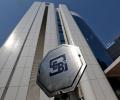
The Securities and Exchange Board of India (Sebi) has identified around Rs 77,800 crore as "difficult-to-recover" or DTR dues in its annual report for 2024-25 (FY26), marking a nearly 2 per cent increase from the previous year. These dues remain unrecovered despite exhaustive recovery efforts.

After overtaking foreign portfolio investors (FPIs) in market ownership, domestic institutional investors (DIIs) have further solidified their dominance. DII ownership reached a new all-time high of 17.82 per cent as of June 2025, up from 17.62 per cent at the end of March 2025, according to an analysis by Prime Database.

The Securities and Exchange Board of India (Sebi) is set to introduce key reforms aimed at facilitating smoother mega initial public offerings (IPOs). Key among the proposals is a reduction in the quota reserved for individual investors - those applying for less than Rs 2,00,000 per application - from the current 35 per cent to 25 per cent for large IPOs (issue size above Rs 5,000 crore).

A ban on US-based high-frequency trader (HFT) Jane Street did little to dent activity in the derivatives segment, with July volumes rising 10 per cent month-on-month to an eight-month high. Analysts and experts said the jump may have come from proprietary and retail traders, spurred by a spike in market volatility.

The Securities and Exchange Board of India (Sebi) has approved a proposal from a startup to test fractional shares in its innovation sandbox, marking a potential shift in the Indian equity landscape. This represents a change in stance from 2021, when Sebi rejected a similar proposal in the regulatory sandbox, primarily due to concerns over the custody of fractional shares.

Market watchers link the pullback to underwhelming listing-day performance and the lack of big-name IPOs.

The Jane Street-Sebi saga is more than a legal dispute -- it's a litmus test for India's ambitions as a global financial hub.

State Bank of India (SBI), the largest lender in the country, has launched a share sale to institutional investors to raise upto Rs 25,000 crore, the biggest qualified institutional placement (QIP) so far by an Indian firm, and has set a floor price of Rs 811.05, which is at a 2.5 per cent discount on Wednesday's closing price.
Sebi aims to stay proactive as HFT and quant firms like Citadel Securities, Optiver, Millennium, and IMC Trading are expanding rapidly in India, which is home to the world's largest derivatives market by contracts traded.

Stocks of brokerages and market infrastructure institutions (MIIs) witnessed selling pressure after the Securities and Exchange Board of India's (Sebi's) crackdown on proprietary trading firm Jane Street. The weakness was attributed to concerns that debarment of the US firm - a prominent player in the futures and options (F&O) segment - will lead to a further decline in volumes, which are already down over 30 per cent from the peak.

Experts say the robust filing suggests the second half of the year will see large-scale issuances, provided the markets remain supportive.

Promoters of India's top private listed companies have cut their stakes sharply since 2021, taking advantage of elevated valuations and reshaping ownership dynamics in the market. Holdings of promoters in the top 200 privately owned listed firms declined nearly 600 basis points (bps) to 37 per cent at the end of FY25, from 43 per cent in FY21.
The Securities and Exchange Board of India (Sebi) on Monday proposed relaxations for asset management companies (AMCs) to serve pooled non-broad-based funds, giving an opportunity to fund houses to expand their business.

The National Stock Exchange (NSE) has offered to pay Rs 1,388 crore to the Securities and Exchange Board of India (Sebi) to settle the colocation and dark fibre cases, potentially clearing the way for its much-awaited initial public offering (IPO). This is the biggest-ever settlement plea made with the markets regulator.

Investors will be able to authenticate if the entity receiving the payment is a valid entity under the ambit of Sebi.
 © 2025 Rediff.com - Investor Information - Advertise with us - Disclaimer - Privacy Policy - Sitemap - Feedback - About us - Terms of use - Grievances